[Maruko-juku] Enjoy tororo soup at "Chojaya," a 400-year-old traditional restaurant. A guide to the history of the Tokaido and hands-on craft experiences
A specialty of Maruko-juku on the Tōkaidō is the traditional "tororo soup," which was even depicted by Hiroshige. We introduce long-established shops with over 400 years of history, historical sites, and craft workshops.
Table of Contents
Open Table of Contents
![[Maruko-juku] Enjoy tororo soup at "Chojaya," a 400-year-old traditional restaurant. A guide to the history of the Tokaido and hands-on craft experiences](/lsc/upfile/article/0000/0019/19_1_l.jpg)
Maruko-juku
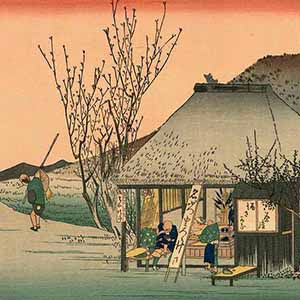
A dish consisting of grated wild yam served over barley rice is generally known as “mugitoro.” While there are restaurants in Tokyo that serve it, they are often high-end kaiseki restaurants where it’s not something you can casually enjoy, or, if you’re looking for a more affordable option, the wild yam is sometimes substituted with Japanese yam."I want to eat my fill of natural yam tororo at an affordable price"—if I hear there’s a town where several restaurants compete to fulfill that wish, I simply must go there no matter what.
That town is Mariko in Suruga Ward, Shizuoka City—a post town that has walked hand in hand with the history of the Tokaido Road. Incidentally, in Shizuoka City (formerly Suruga), no one calls it “Mugitoro.” This is because, as depicted in Hiroshige’s woodblock prints, it has a traditional name: “Tororo-jiru.”
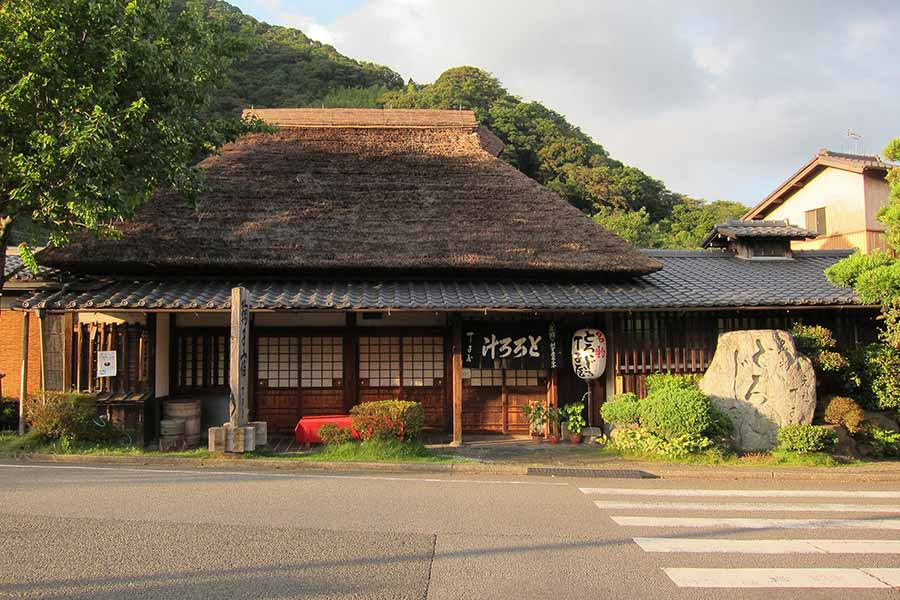
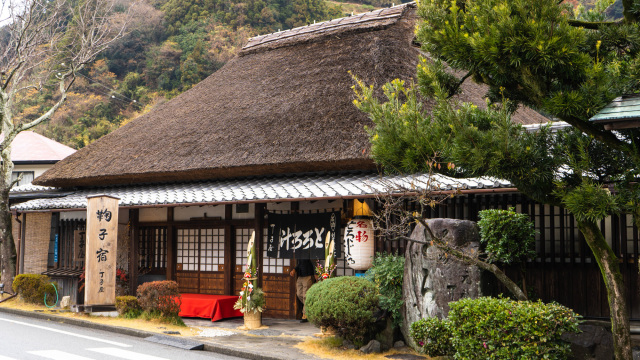
Maruko's Chojiya, founded in 1586.
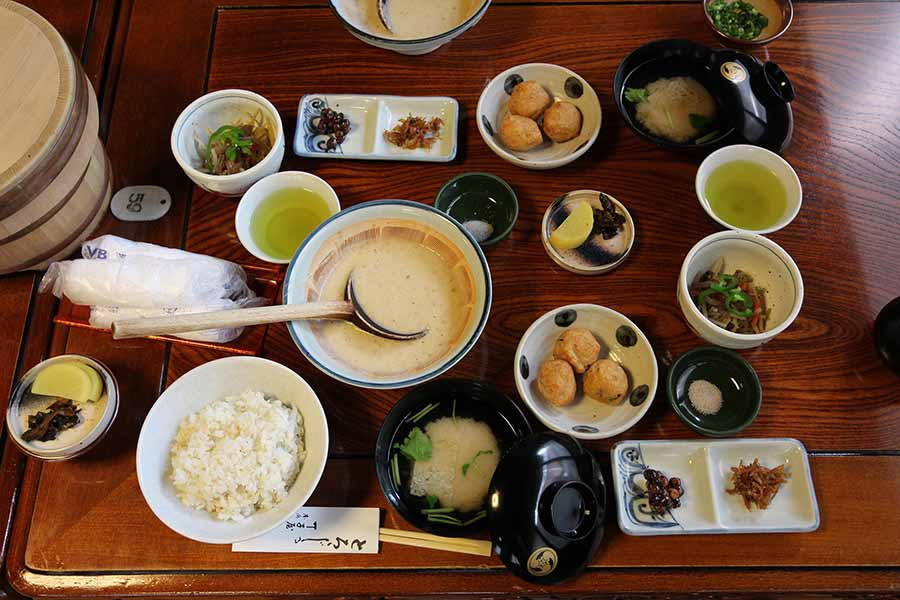
This is Maruko-juku’s specialty: tororo soup. It is mentioned in Basho’s haiku as “Ume Wakana, Maruko-juku’s tororo soup,” and Jippensha Ikku also featured it in his work *Tokaidochu Hizakurige*.
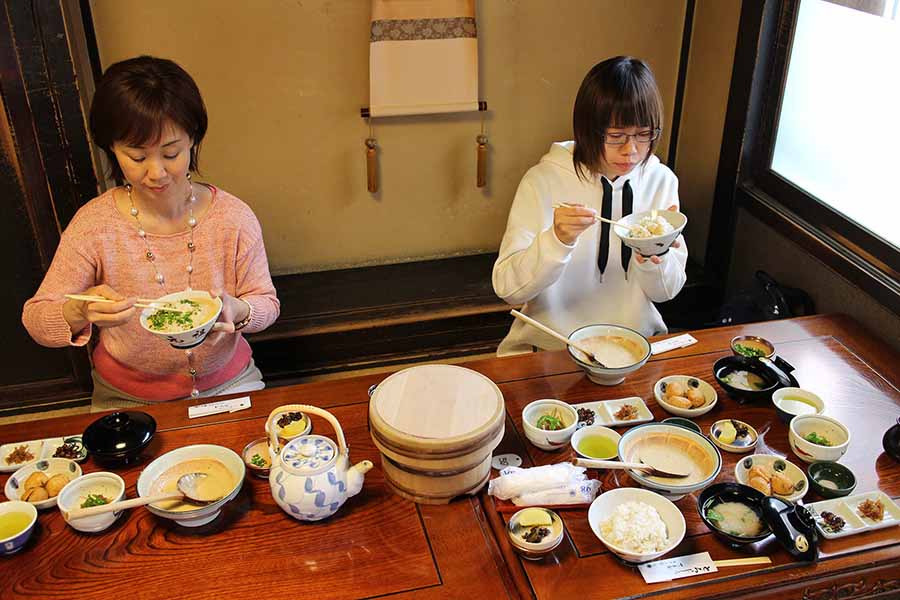
"There are a lot of restaurants in Maruko that serve tororo soup, and they're all competing with each other," I was told. It's a level of deliciousness that transcends the modern concept of "gourmet"—I was completely hooked. I seriously considered trying to visit every single one.
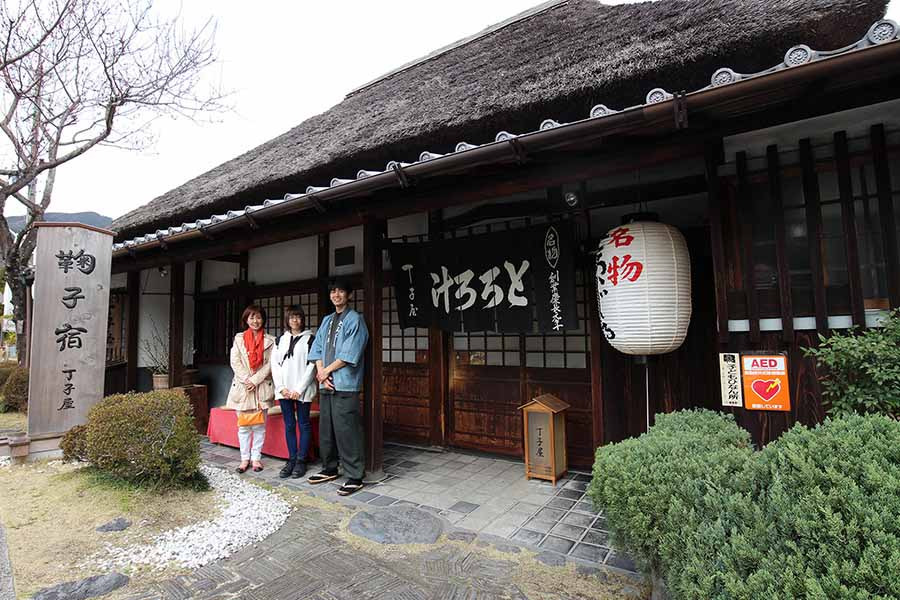
Mr. Shibayama, the 14th-generation head of Chojaya, gave us a tour of the post town of Maruko. He’s a dependable young leader who spares no effort for anyone.
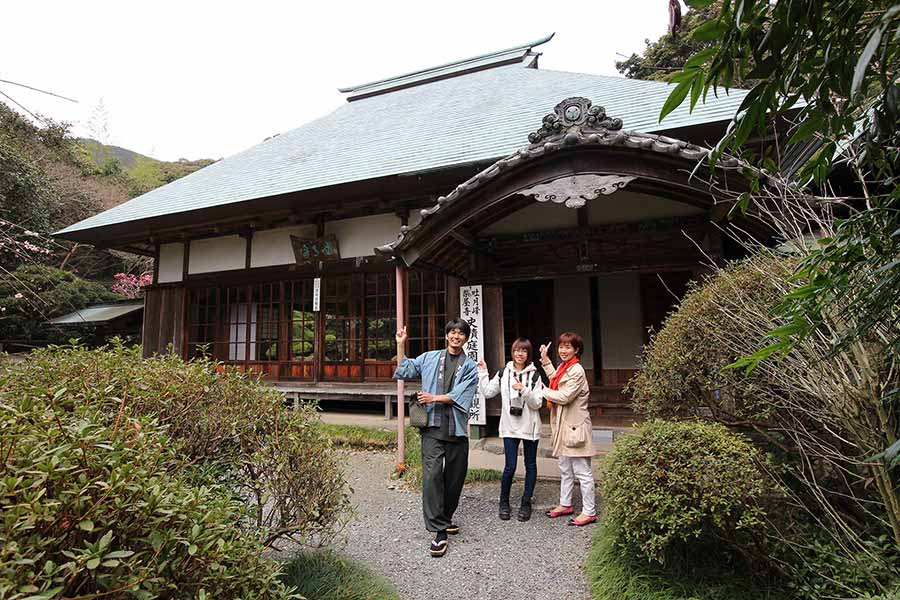
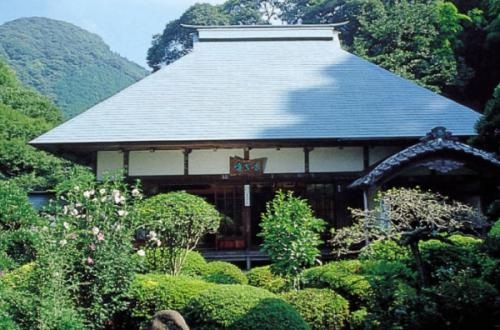
This is Shibayaji Temple on Mount Togetsu. Its garden, known as a “borrowed-scenery garden” for the way it incorporates the surrounding natural landscape, dates back to the Warring States period (the Imagawa era in the Sunpu region). A tea room dating from a time even earlier than Sen no Rikyū also remains here.
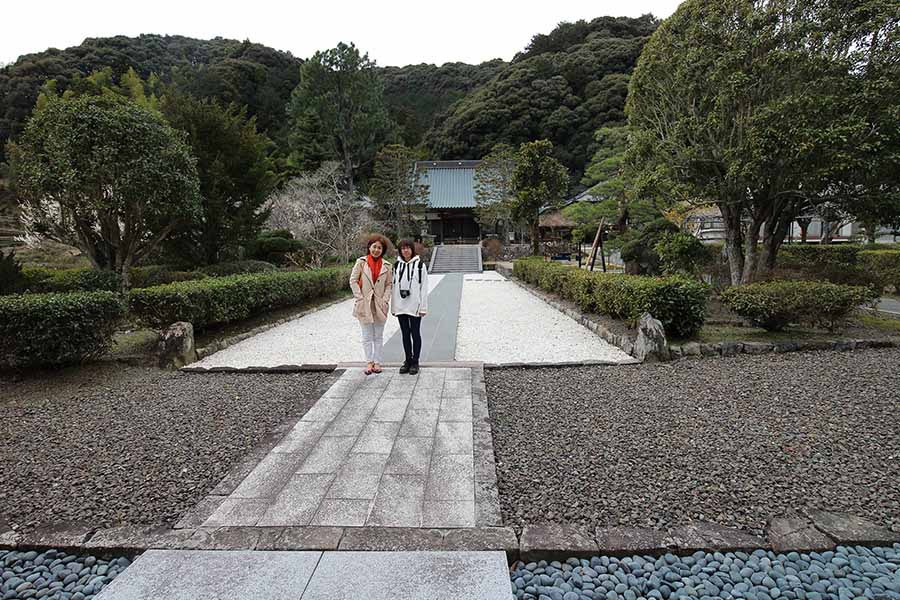
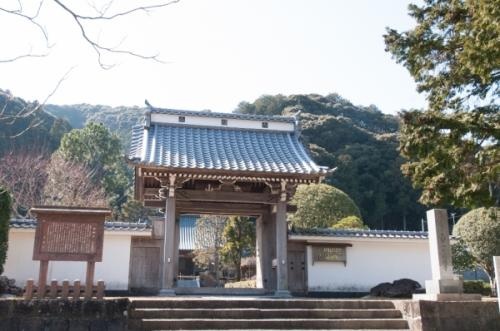
Seigan-ji Temple. The tomb of Katagiri Katsumoto, who worked tirelessly to negotiate during the Siege of Osaka, remains here. This place also served as a stage in the history of Tokugawa Ieyasu’s unification of Japan.
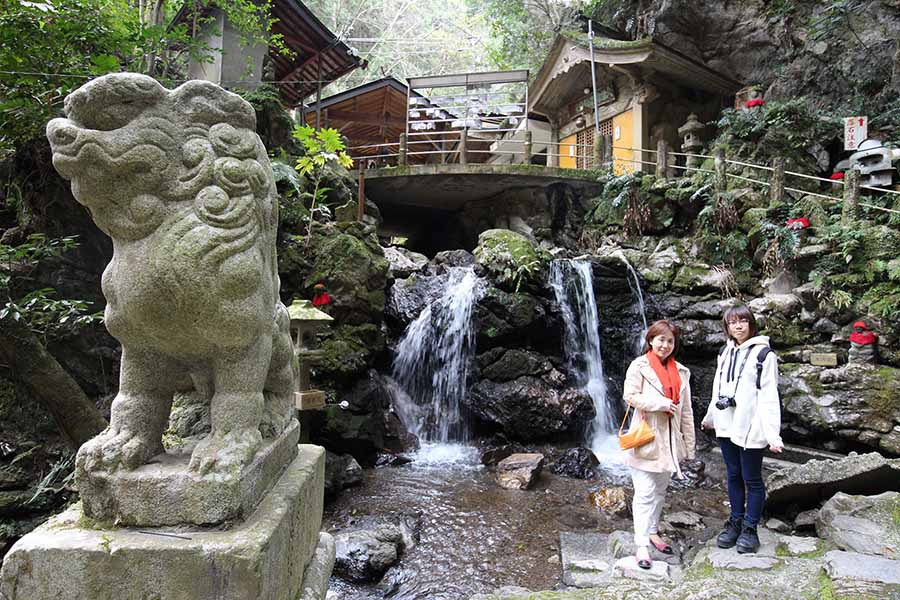
The Ōdatara Fudōson, managed by Seigan-ji Temple. It has a unique atmosphere and is popular locally as a spiritual power spot.
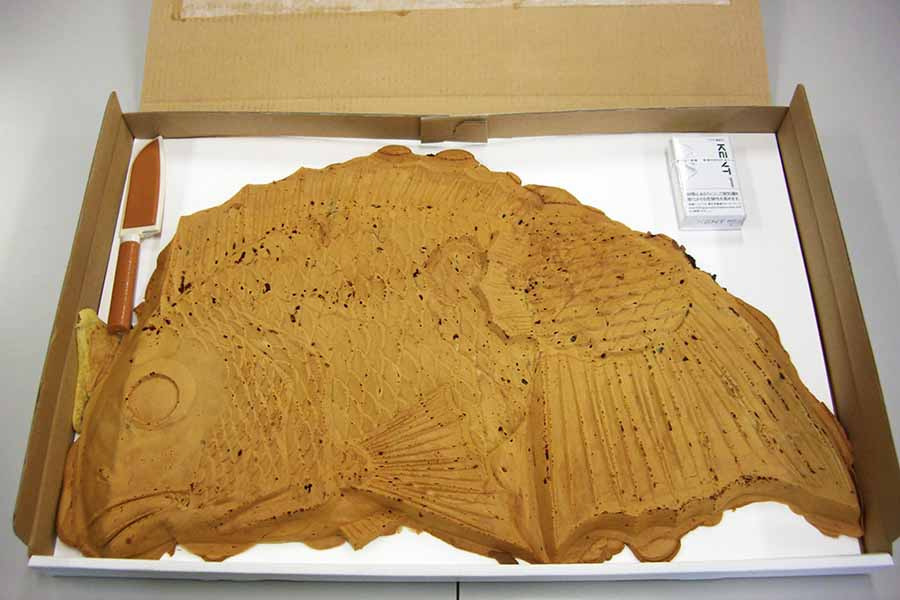
A taiyaki shop I passed on the way to Fudōson. I was completely blown away by the giant taiyaki, which was a whopping 60 centimeters long.
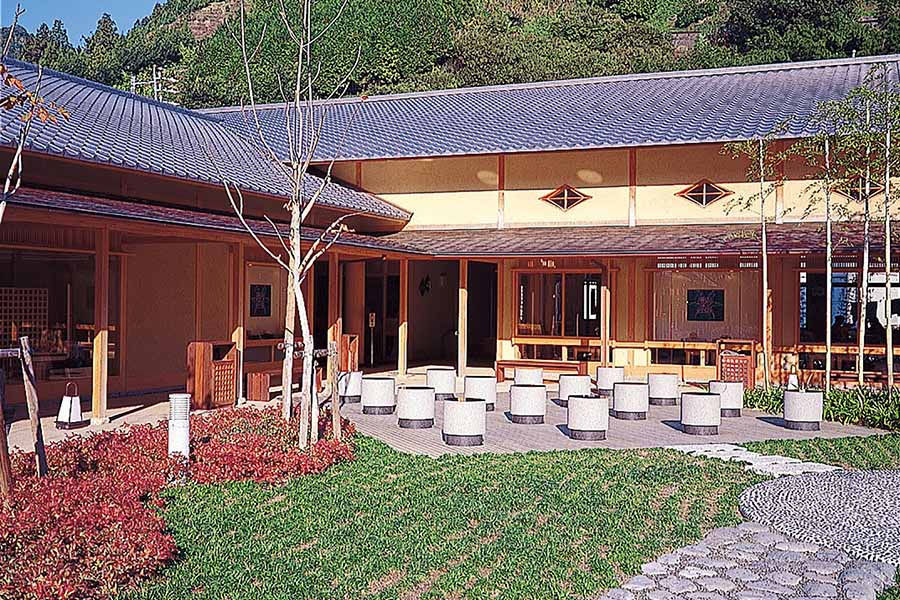
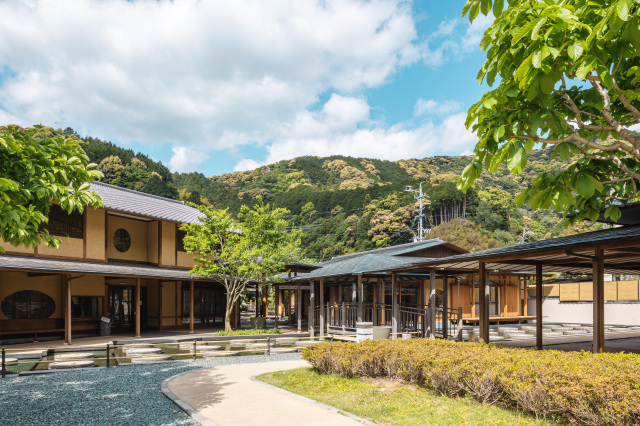
"Sunpu Takumi-shuku," a facility where visitors can experience traditional crafts.
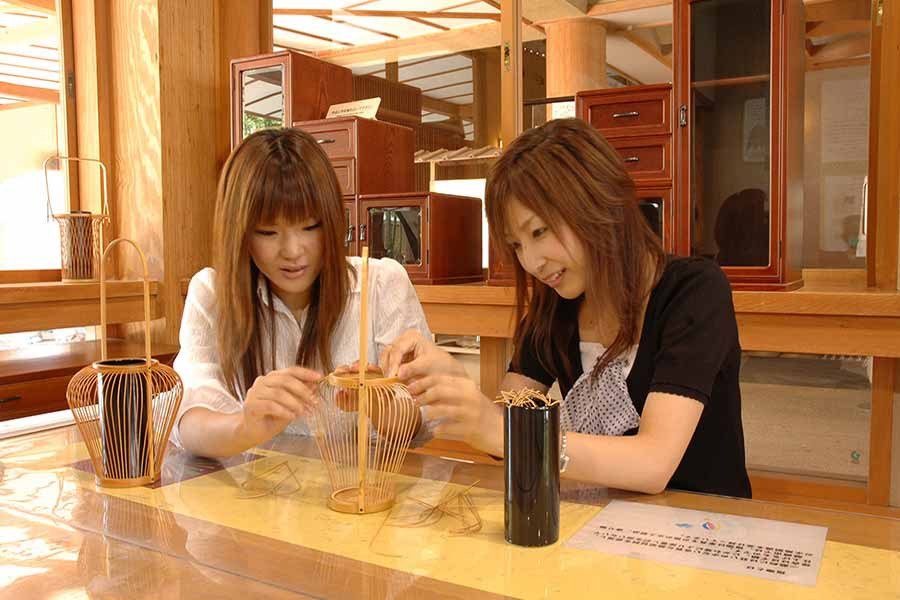
I tried my hand at "Suruga Take Sen-suji Zai-ku" (Suruga bamboo weaving). All the necessary materials and tools are provided. It’s also fun to pick out a craft item to take home as a souvenir.
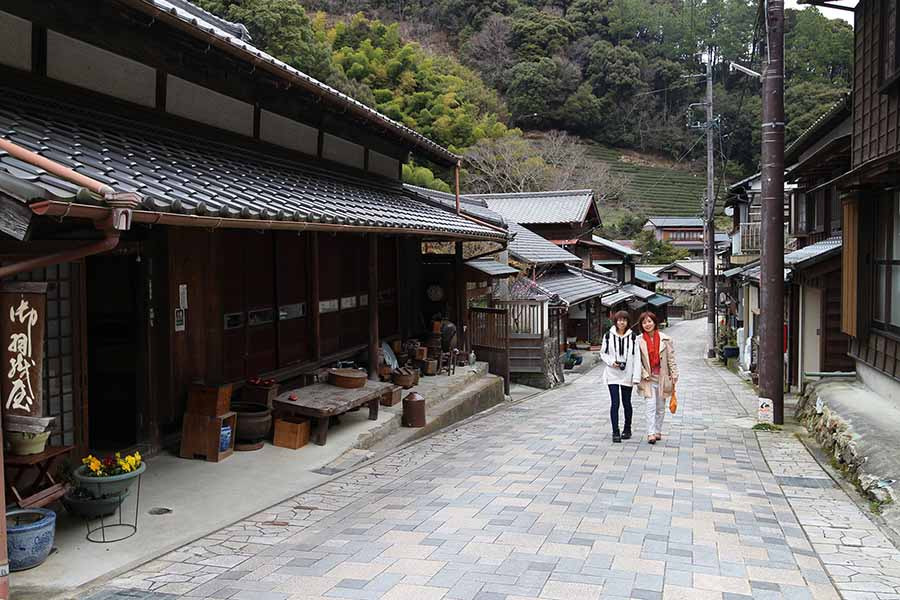
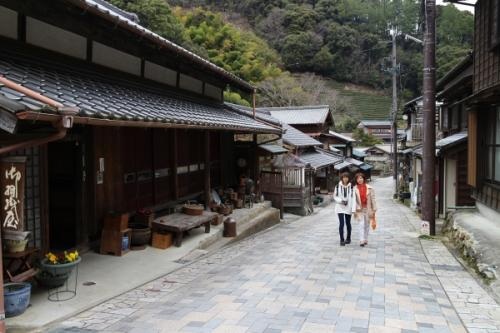
I walk along the old Tōkaidō Road from Maruko-juku toward Utsunoya Pass. The townscape evokes memories of days gone by.
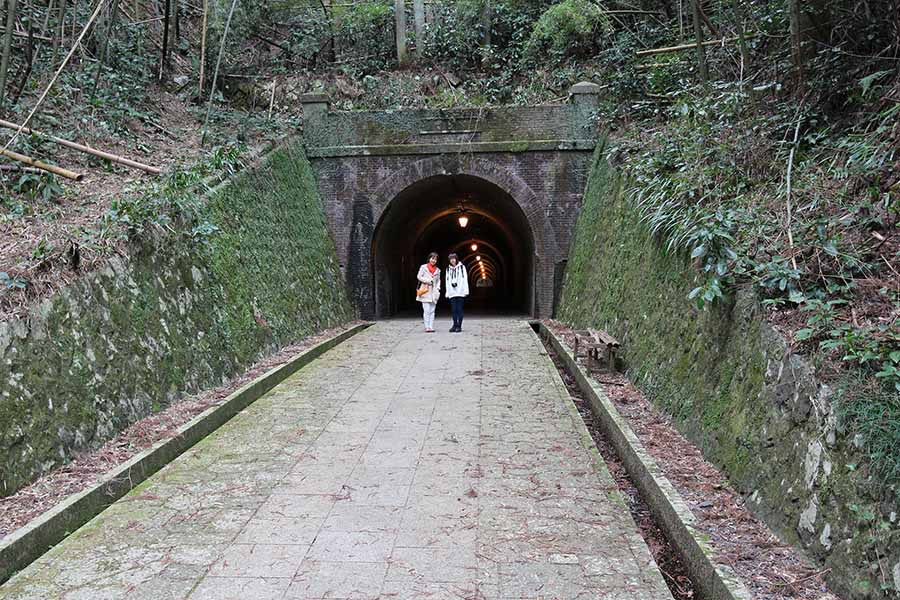
At Utsunoya Pass, there are four tunnels built during different eras: the Meiji, Taisho, Showa, and Heisei periods. This is the "Meiji Tunnel," renowned for its beautiful brickwork.
Related Information
Local Information
- Chōjiya
- A specialty restaurant serving tororo soup, established in 1596.Featured in Utagawa Hiroshige’s ukiyo-e print “Marik…
- See More
- Takumi-yado: The Workshop in Sunpu
- One of Japan’s largest traditional craft experience facilities, built around the concept of “a place that connects h…
- See More
- Togetsukō Shibayaji Temple
- This temple is associated with Munenaga, a renga poet who served the Imagawa clan. Its borrowed-scenery garden, which skillfully…
- See More
- The Row of Houses in Utsunoya
- Just before Utsunoya Pass, a quiet village stands with rows of houses that look just as they did in the Edo period. It was once …
- See More
- Seigan-ji Temple
- Founded by Minamoto no Yoritomo, this temple was destroyed by fire during a war and later rebuilt by Takeda Shingen. It houses t…
- See More
Map of Nearby Attractions
Trip Route
- Chōjiya
- Takumi-yado: The Workshop in Sunpu
- Togetsukō Shibayaji Temple
- The Row of Houses in Utsunoya
- Seigan-ji Temple
If you load Google Map beyond the daily limit, it may not display correctly.
![[National Treasure] Highlights of Kunozan Toshogu Shrine | Exploring the Tomb of Tokugawa Ieyasu and Spectacular Views](/lsc/upfile/article/0000/0009/9_1_m.jpg)